Wood is Good: Large Woody Debris (a.k.a. LWD) in Natural Streams and Rivers
•
July 16, 2026
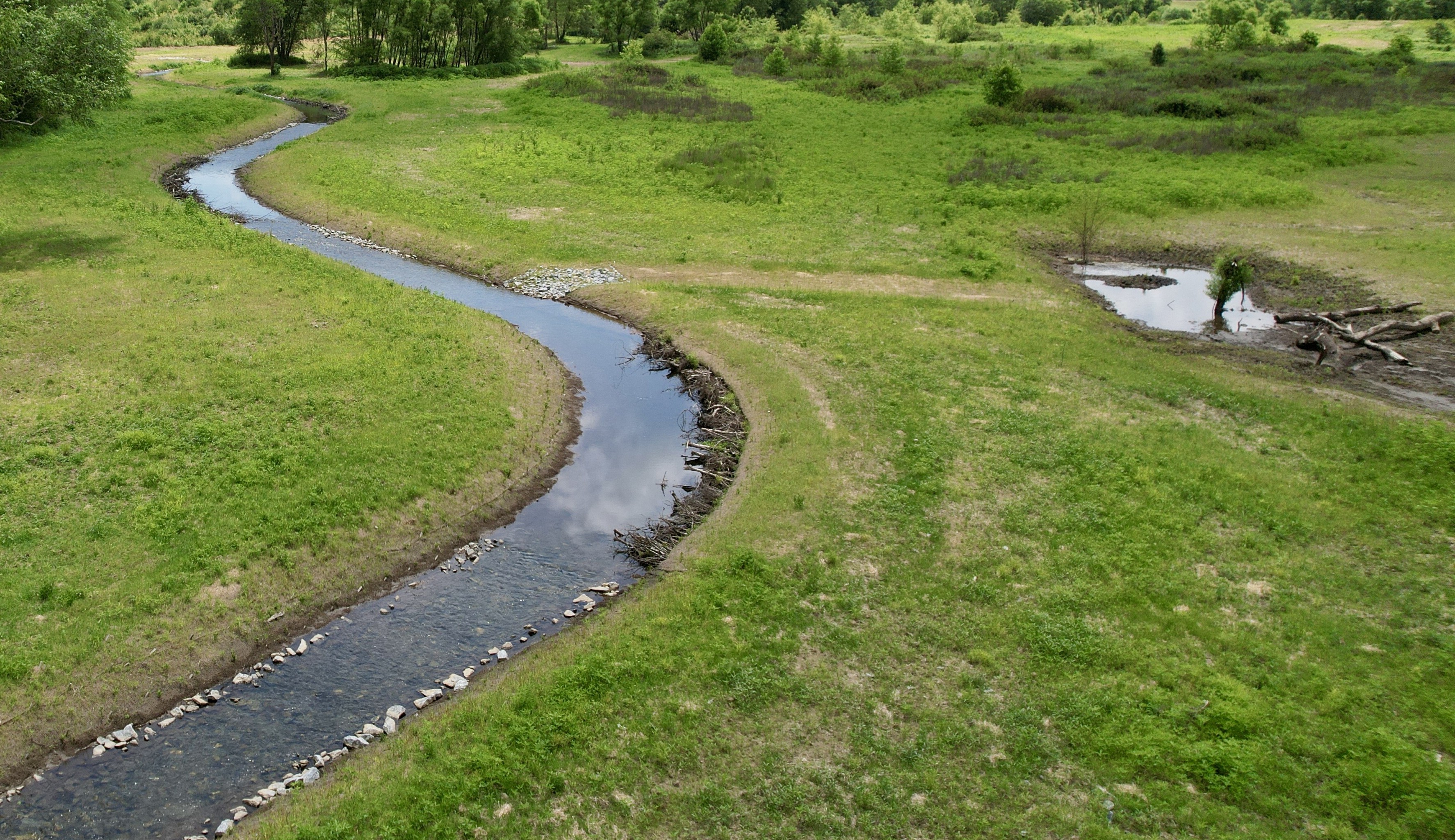


There is a long history of stream and river management focused on removing large wood to create free-flowing, “clean” channels. This approach has fostered a lasting negative public perception of large woody debris (LWD) in waterways. Many people now instinctively associate LWD with flooding, bank erosion, and infrastructure damage, particularly following recent flooding in North Carolina. LWD includes fallen trees, logs, and branches within the bankfull channel or floodplain that are at least four inches in diameter and six feet long. LWD is a critical component of healthy streams. It supports geomorphic, hydraulic, and biological functions in stream and river ecosystems.
What the Research Says about Wood and Flooding
Recent research conducted in North Carolina (Kurki-Fox and Doll, 2025) indicates that the common practice of blanket removal of large wood from streams using “snag and drag” methods provides very little actual benefit for reducing large-magnitude flood risk. Hydraulic modeling across multiple study sites demonstrated that existing wood accumulations resulted in minimal increases (typically less than 0.3 ft) on upstream water surface elevations during 10-year and 100-year storm events. This occurs because most of the flow naturally moves to the floodplain during a flood, and LWD within the channel has little effect on hydraulics of the flow out on the floodplain. Interestingly, the research highlights that undersized infrastructure, such as bridges and culverts, often has a far greater impact on flooding than the presence of wood in the channel. In many cases, these human-made bottlenecks create substantial backwater conditions that negate any potential benefits from wood removal.
Geomorphic Functions: Critical for Bedform Diversity
LWD acts as a primary driver for physical heterogeneity and channel complexity. By disrupting uniform flow patterns, large wood can facilitate bedform diversity. As in-stream flow interacts with an obstruction, localized turbulence and scour create deep pools that provide thermal refugia: stratified cool-water pockets essential for cold-water species during seasonal temperature peaks (kind of like a VIP, air-conditioned lounge for trout). LWD also functions as a natural grade control. It promotes the upstream aggradation of coarse substrates (gravels/cobbles) while facilitating the downstream transport of fine-grained sediments. In high-gradient, headwater systems, LWD facilitates step-pool morphology. Logs act as natural steps, dissipating energy and mitigating the risk of channel incision and headcutting.
Hydraulic Functions: Energy Dissipation and Boundary Roughness
LWD is an essential component of channel and floodplain roughness. Woody obstructions add flow resistance, effectively slowing velocities to reduce shear stress and protect banks from excessive lateral migration. LWD also promotes floodplain reconnection by increasing the frequency of overbank flows. During high-flow events, wood on the floodplain creates diverse flow paths that distribute sediment and nutrients across the riparian corridor. By slowing down and dispersing floodplain flows, LWD can act as a buffer to attenuate downstream peak flows.
Biological Functions: Trophic Foundations and Habitat Niche
LWD is a critical component of the aquatic ecosystem, providing both physical protection and a source of organic material. Large root balls and complex branch structures (e.g. debris dams) provide protection and concealment for juvenile fish. Wood provides a stable substrate for the development of biofilms (which is a fancy term for highly nutritious slime that bugs like to eat) and microbial communities. This is the primary energy source for macroinvertebrate scrapers and shredders, which form the base of the aquatic trophic pyramid. Exposed LWD serves as essential basking and perching sites for reptiles, amphibians and avian species, while submerged undercut banks created by wood-forced scour provide niche spawning and resting habitats.
Design and Implementation in Stream and River Restoration
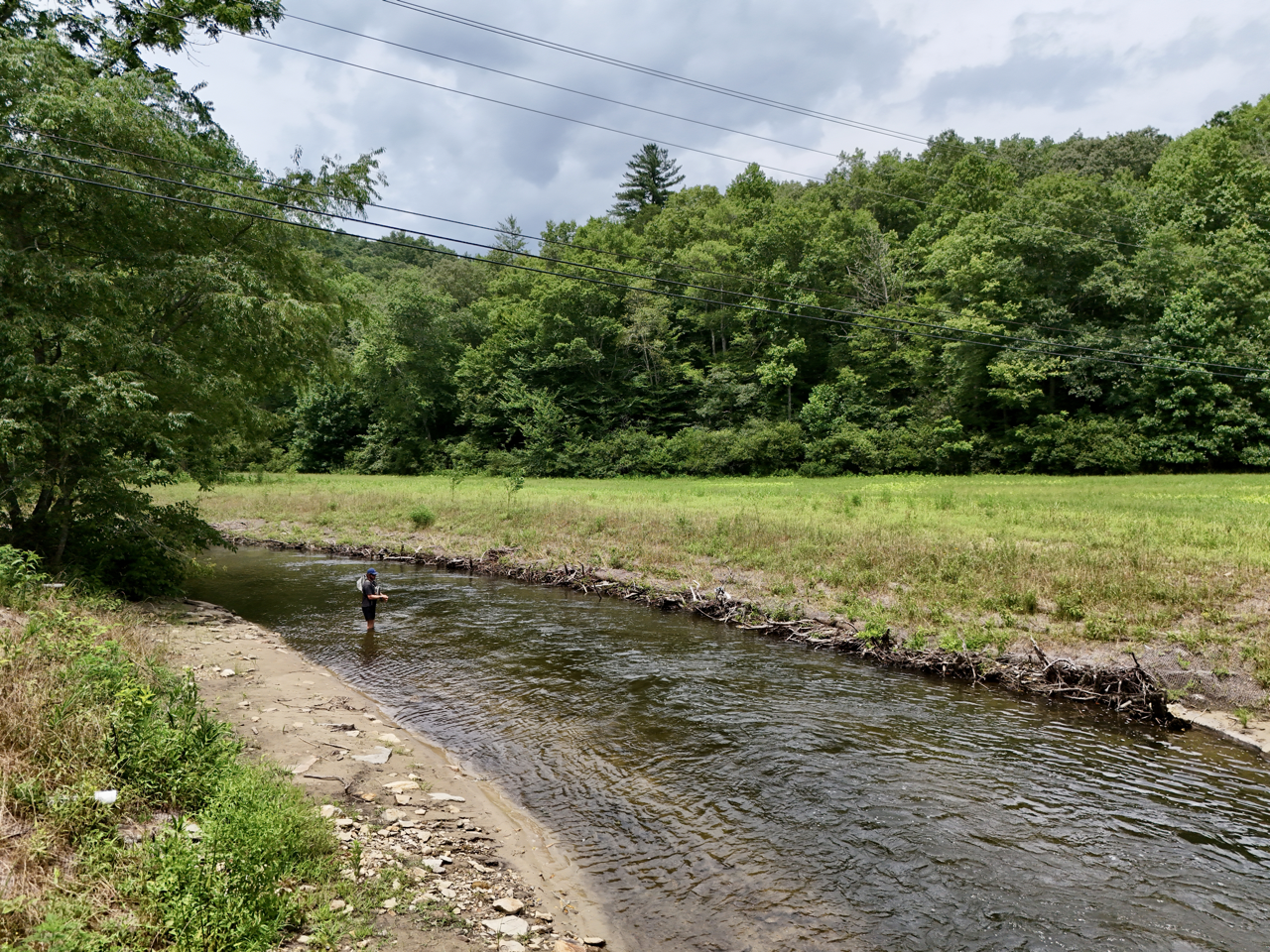
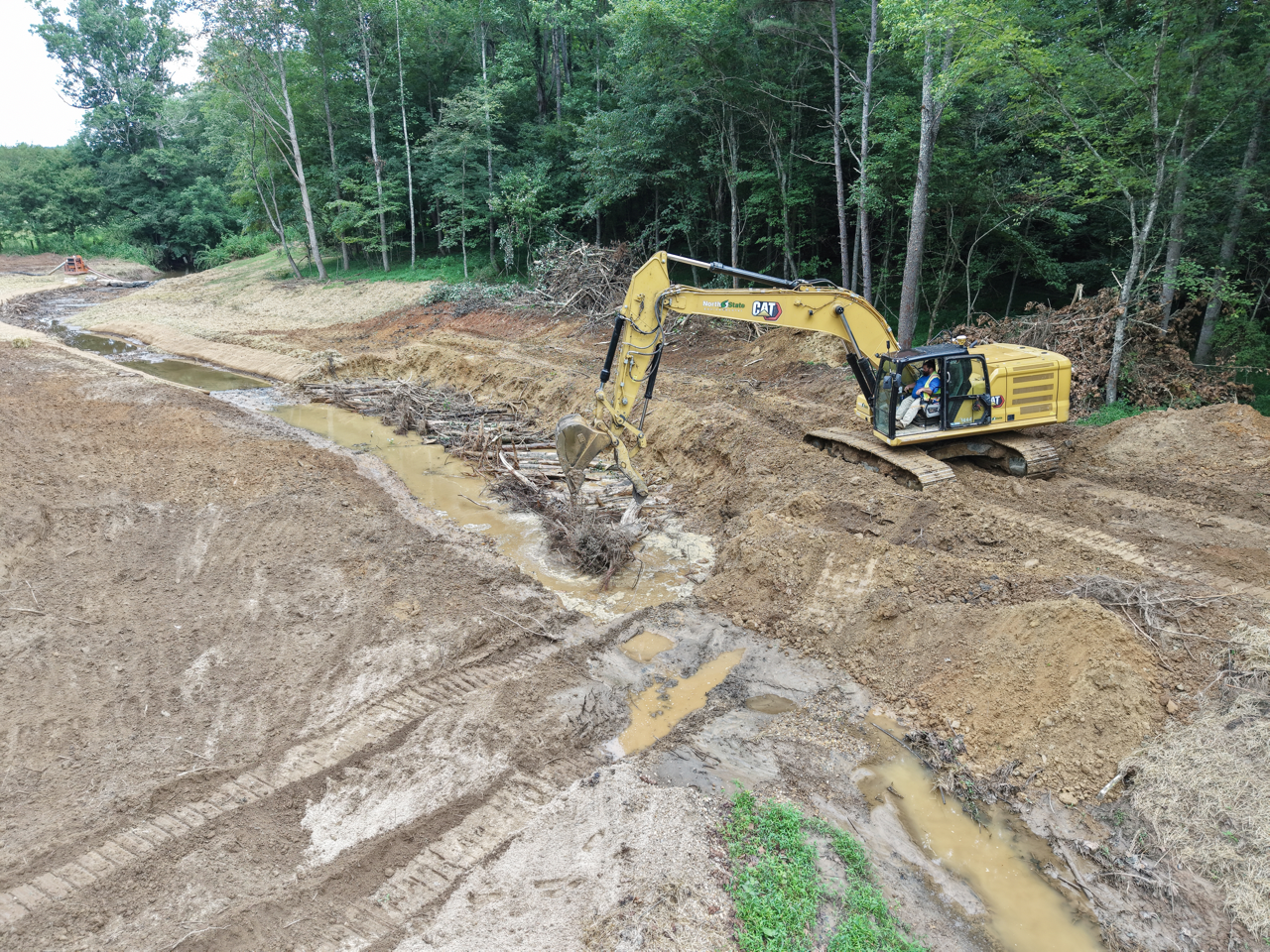
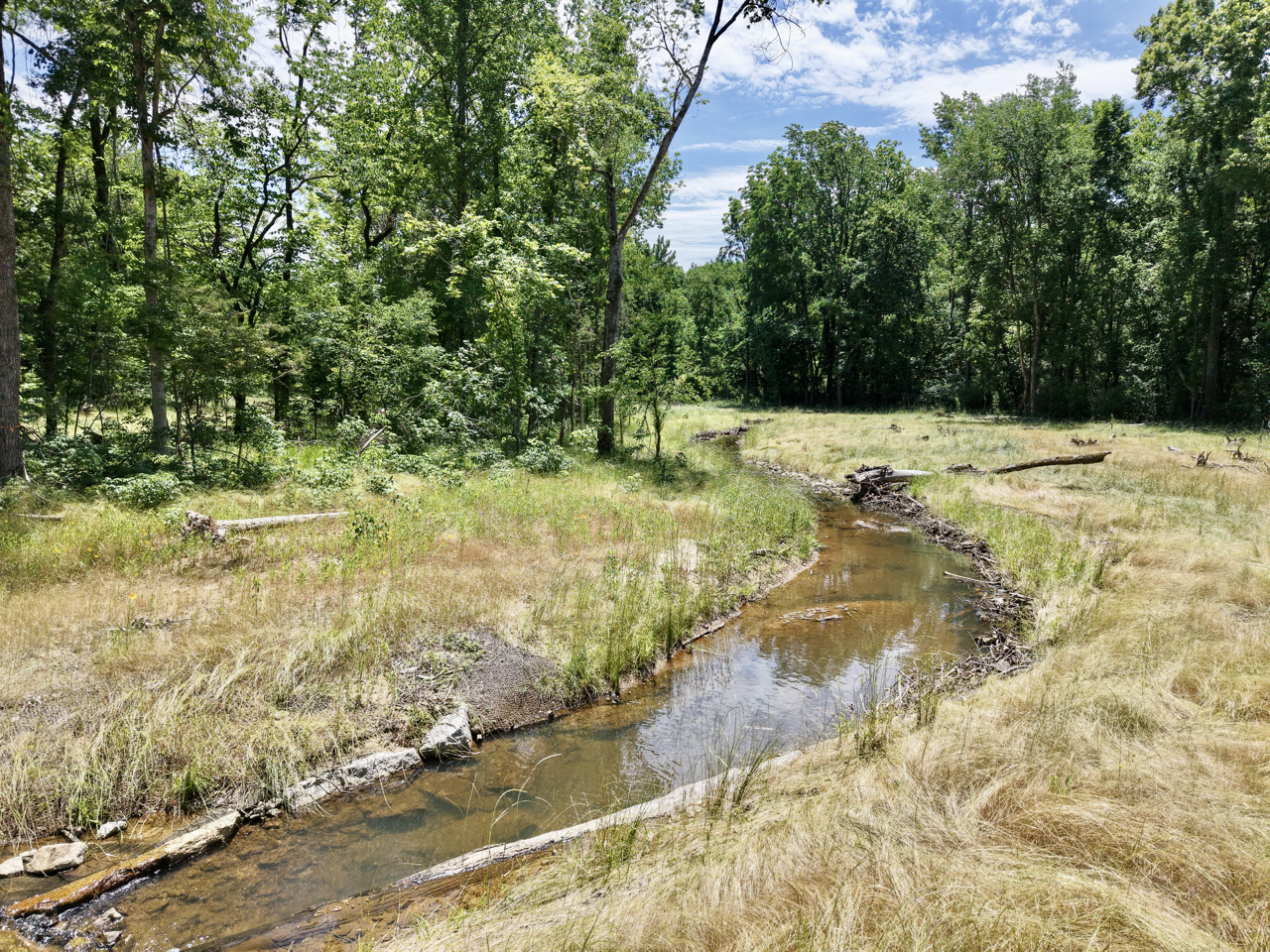
Our practice at River Mechanics is to integrate LWD from any clearing and grubbing activities into the project to achieve our bedform diversity, flow resistance and habitat objectives. Log vanes (single arm or with a boulder j-hook) are utilized to strategically shift the thalweg away from sensitive or eroding outer banks, centering the energy within the channel and maintaining a well-defined scour pool. Woody material can also be incorporated into riffles for enhanced hyporheic exchange. One of our most common toe protection treatments is called “Brush Toe” or “Toe Wood”, which incorporates thick layers of LWD and fine woody material at the base of the river bank to resist shear stress and erosion along the toe. This structure also adds organic material to the channel and creates unique submerged habitat for aquatic organisms. Any excess material is not wasted. It is distributed across the floodplain as “blow downs” or cover logs to increase floodplain roughness coefficients and enhance terrestrial habitat. Smaller brush and fines are scattered to provide immediate organic matter for nutrient cycling and micro-shading (because that’s definitely a thing) to support germination of temporary and permanent seeding.
While the ecological benefits of instream wood are clear, designers must maintain a balance between geomorphic function and public safety. Hydraulic modeling should always be completed to ensure that LWD placements do not pose an unacceptable risk to upstream property owners, downstream crossings, navigation, infrastructure or property.

JP founded River Mechanics in 2020 after several years conducting applied research and teaching at NC State's Bio&Ag Engineering Department. He has led more than 200,000 linear feet of stream and river restoration across the Southeast and is licensed in NC, SC, GA, TN, and VA.

Jack is a Research Scholar in NC State's Biological & Agricultural Engineering Department, where he models flooding, water quality, and natural infrastructure for communities across eastern North Carolina and trains practitioners in stream assessment and hydraulic modeling. He is a licensed professional engineer with degrees from the University of Florida and NC State.

Cameron has spent twelve years in ecological restoration, from leading survey crews to designing grant-funded projects at NC State. At River Mechanics he carries projects from site assessment through final design and post-construction monitoring.